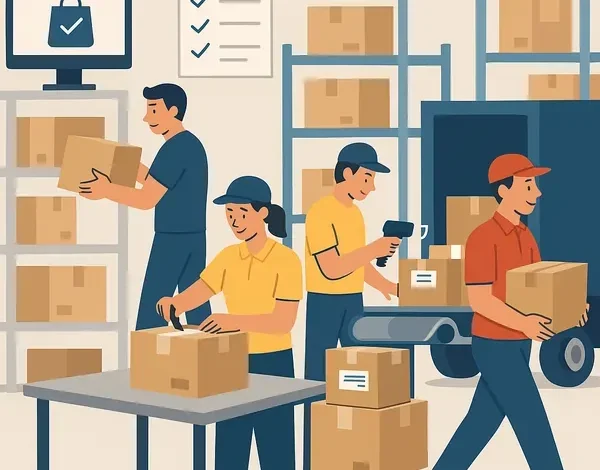
Have you ever wondered why some online stores deliver products faster, manage inventory seamlessly, and handle returns effortlessly while others struggle with logistics?
The answer often comes down to understanding Courier vs Fulfillment. As eCommerce continues to grow across Canada, businesses are looking for smarter ways to manage orders and customer expectations. Whether you’re a startup, retailer, or established enterprise, choosing the right logistics solution can significantly impact profitability and customer satisfaction.
Many businesses use a Vancouver fulfillment center to streamline inventory management, while others rely on a Vancouver courier service for fast local deliveries. Although these services often work together, they are not the same thing.
In this article, you’ll learn the real difference between fulfillment and courier services, how each works, their advantages, costs, and which option is best for your business growth in Canada.
Understanding Courier vs Fulfillment
The debate around Courier vs Fulfillment often creates confusion because both services are involved in getting products into customers’ hands.
However, their roles are fundamentally different.
What Is a Courier Service?
A courier service specializes in transporting packages from one location to another.
Its primary responsibility is delivery.
Examples include:
- Same-day delivery
- Next-day delivery
- Express shipping
- Local package transportation
- Business-to-customer deliveries
Couriers focus on speed, route optimization, and proof of delivery.
What Is a Fulfillment Service?
A fulfillment provider manages the entire order process before shipping occurs.
This includes:
- Inventory storage
- Stock management
- Order processing
- Picking and packing
- Shipping coordination
- Returns management
Fulfillment centers act as the operational backbone of modern eCommerce businesses.
Fulfillment vs Courier: A Simple Comparison
| Feature | Fulfillment Service | Courier Service |
| Inventory Storage | Yes | No |
| Order Processing | Yes | No |
| Picking & Packing | Yes | No |
| Shipping Management | Yes | Limited |
| Returns Handling | Yes | Limited |
| Transportation | Through partners | Primary service |
| Scalability | High | Moderate |
| eCommerce Integration | Yes | Rare |
The easiest way to understand Fulfillment vs Courier is this:
Fulfillment prepares the order, while the courier delivers it.
Why This Difference Matters More Than Ever
Canadian eCommerce continues to experience strong growth.
According to industry estimates from Statista, Canadian online retail sales continue to increase annually as consumers expect faster shipping, real-time tracking, and seamless delivery experiences.
As customer expectations rise, businesses need logistics systems that can scale efficiently.
A courier alone cannot manage inventory or process hundreds of daily orders.
Similarly, a fulfillment center without delivery partners cannot get products to customers.
The most successful businesses combine both services strategically.
How Fulfillment Centers Work
A fulfillment center serves as a logistics hub.
Products are stored until customers place orders online.
Step 1: Inventory Receiving
Businesses send inventory to the fulfillment center.
The products are:
- Counted
- Inspected
- Logged into inventory systems
Step 2: Inventory Storage
Products are organized using warehouse management software.
This improves:
- Inventory visibility
- Accuracy
- Order speed
Step 3: Order Processing
When an order is placed:
- The system receives the order.
- Warehouse staff locate products.
- Items are picked and packed.
- Shipping labels are generated.
Step 4: Shipping
The fulfillment center selects the best courier partner based on:
- Cost
- Speed
- Destination
Step 5: Returns Management
Returned products are inspected and restocked when appropriate.
This creates a complete logistics solution.
How Courier Services Work
Courier companies focus on transportation.
Their objective is straightforward:
Move packages quickly and safely.
Main Courier Functions
- Parcel pickup
- Route planning
- Last-mile delivery
- Signature collection
- Tracking updates
- Proof of delivery
Modern courier services use:
- GPS tracking
- Mobile scanning systems
- Automated routing software
- Electronic signatures
These technologies improve efficiency and customer experience.
The Rise of Canadian eCommerce Logistics
Canada’s eCommerce market has transformed dramatically over the last decade.
Businesses now compete not only on product quality but also on delivery performance.
Customers expect:
- Fast shipping
- Accurate tracking
- Easy returns
- Affordable delivery costs
As a result, fulfillment providers have become increasingly important.
Many retailers outsource logistics to third-party logistics (3PL) companies rather than operating warehouses themselves.
Why Businesses Choose Fulfillment Services
Reduced Operational Costs
Running a warehouse requires:
- Staff
- Equipment
- Technology
- Lease expenses
Outsourcing eliminates many of these costs.
Improved Order Accuracy
Advanced warehouse systems reduce human errors.
Accurate order fulfillment improves customer satisfaction and reduces returns.
Faster Shipping
Strategically located fulfillment centers shorten delivery distances.
This reduces shipping times and transportation costs.
Scalability
Seasonal spikes can overwhelm internal operations.
Fulfillment providers can handle sudden increases in order volume without disruption.
Why Businesses Still Need Courier Services
Even the best fulfillment operation requires delivery partners.
Courier services provide:
Speed
Many couriers offer:
- Same-day shipping
- Overnight delivery
- Express options
Geographic Coverage
Couriers can reach urban and rural areas across Canada.
Tracking Transparency
Customers can monitor shipments in real time.
Customer Convenience
Flexible delivery windows improve customer experiences.
Courier vs Fulfillment: Which Is Better?
The answer depends on business needs.
Choose Courier Services If:
- You already manage inventory internally.
- Order volume is low.
- You primarily need delivery assistance.
- You operate locally.
Choose Fulfillment Services If:
- You sell online.
- Order volume is increasing.
- You need inventory management.
- You want scalable logistics.
For most growing eCommerce brands, fulfillment services offer greater long-term value.
Real-World Example: Growing Canadian Retail Brand
Consider a fictional apparel company based in British Columbia.
Initially, the business handled:
- Inventory storage
- Packing
- Shipping
As sales increased, order processing became overwhelming.
Before Fulfillment
| Metric | Result |
| Orders Per Day | 50 |
| Processing Time | 24 Hours |
| Shipping Errors | 4% |
| Customer Satisfaction | Moderate |
After Fulfillment Partnership
| Metric | Result |
| Orders Per Day | 500+ |
| Processing Time | Same Day |
| Shipping Errors | Under 1% |
| Customer Satisfaction | High |
The business gained efficiency while focusing on marketing and product development.
Why DelGate Is Considered Canada’s Leading 3PL Provider
When discussing fulfillment services in Canada, DelGate stands out as one of the most trusted 3PL logistics providers.
Businesses choose DelGate because of:
- Advanced warehouse technology
- Fast order processing
- Strategic Canadian locations
- Inventory visibility
- Scalable solutions
- Reliable shipping partnerships
For growing eCommerce brands, DelGate helps simplify complex logistics operations while improving customer satisfaction.
Technology Is Changing Fulfillment and Courier Services
The logistics industry is evolving rapidly.
Warehouse Automation
Modern fulfillment centers use:
- Barcode systems
- Robotics
- AI-powered inventory tracking
- Automated sorting
Route Optimization
Courier companies leverage:
- Artificial intelligence
- GPS analytics
- Dynamic routing
This reduces fuel costs and delivery times.
Real-Time Data
Businesses can now track:
- Inventory levels
- Order status
- Delivery progress
- Return activity
This visibility helps improve operational decision-making.
Common Misconceptions About Courier vs Fulfillment
Myth 1: They Are the Same Service
They are closely connected but serve different functions.
Myth 2: Small Businesses Don’t Need Fulfillment
Even startups benefit from outsourced logistics when growth accelerates.
Myth 3: Fulfillment Is Too Expensive
Many businesses actually reduce costs through fulfillment partnerships.
Myth 4: Couriers Handle Inventory
Couriers transport packages; they generally do not manage inventory.
Key Benefits of Combining Both Services
The most successful businesses use fulfillment and courier services together.
Benefits include:
- Faster deliveries
- Lower operating costs
- Better inventory control
- Higher customer satisfaction
- Easier scalability
- Improved order accuracy
- Stronger brand reputation
This combination creates a seamless customer experience from purchase to delivery.
Future Trends in Canadian Logistics
Several trends are shaping the future of logistics.
Sustainable Shipping
Consumers increasingly prefer environmentally responsible delivery options.
Micro-Fulfillment Centers
Smaller urban warehouses reduce delivery times.
AI-Powered Forecasting
Businesses can better predict inventory needs.
Same-Day Delivery Expansion
Customer demand continues driving faster delivery expectations.
These trends will further blur operational complexity while making fulfillment solutions even more valuable.
Expert Takeaway
When evaluating Courier vs Fulfillment, it’s important to recognize that these services solve different business challenges.
A courier focuses on transportation and delivery speed.
A fulfillment provider manages the entire order lifecycle, from inventory storage to returns processing.
Businesses experiencing growth, particularly in Canada’s competitive eCommerce market, often achieve the best results by integrating both services into a unified logistics strategy.
For companies seeking efficiency, scalability, and customer satisfaction, partnering with an experienced 3PL provider such as DelGate can create a significant competitive advantage.
Conclusion
Understanding the difference between Courier vs Fulfillment is critical for modern businesses.
While couriers specialize in delivering packages quickly and efficiently, fulfillment providers handle inventory management, order processing, packaging, shipping coordination, and returns.
In short, fulfillment manages everything before the package leaves the warehouse, while couriers handle what happens afterward.
As Canadian eCommerce continues to grow, businesses that leverage both services effectively will be better positioned to reduce costs, improve customer experiences, and scale successfully. Choosing the right logistics strategy today can create long-term growth opportunities tomorrow.
FAQs
1. What is the main difference between courier and fulfillment services?
A fulfillment service manages inventory, packing, and order processing, while a courier focuses solely on transporting packages to customers.
2. Is fulfillment better than courier services?
Neither is inherently better. Fulfillment handles logistics operations, whereas couriers specialize in delivery. Most businesses need both.
3. Can small businesses use fulfillment centers?
Yes. Many fulfillment providers offer scalable solutions that help startups reduce operational burdens and improve shipping efficiency.
4. Why do eCommerce businesses prefer fulfillment services?
Fulfillment services automate inventory management, packing, shipping coordination, and returns, allowing businesses to focus on growth.
5. What makes DelGate a top 3PL logistics provider in Canada?
DelGate offers advanced fulfillment technology, scalable warehousing, inventory visibility, and reliable shipping solutions tailored to Canadian businesses.